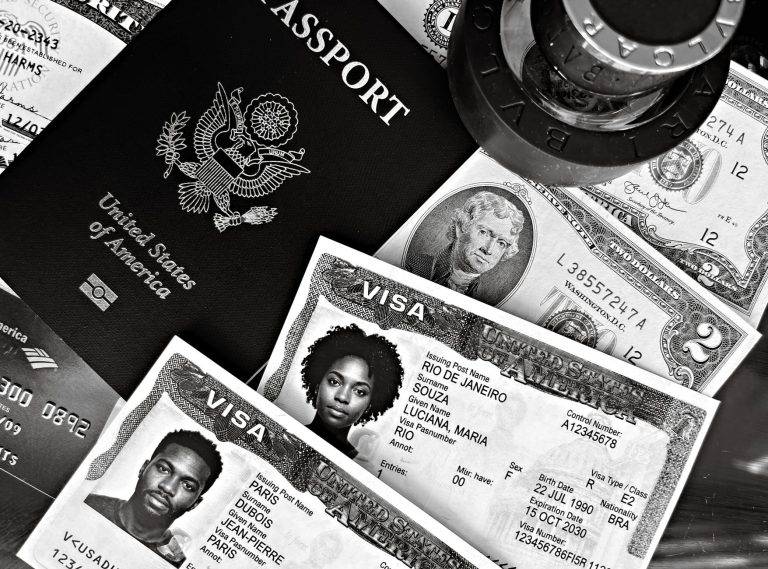
H-1B visa controversy has emerged as Vance clarifies his previous remarks about Indian in-laws, stating that his rhetoric may have been imperfect. He emphasizes his appreciation for their contributions.
Understanding the H-1B Visa Controversy
The H-1B visa controversy has drawn significant attention in recent weeks, particularly following remarks made by political figure J.D. Vance regarding his Indian in-laws. The H-1B visa program allows U.S. companies to employ foreign workers in specialty occupations, often in technology and engineering fields. Critics argue that it can lead to the exploitation of workers, with some labeling them as “indentured servants.” This phrase, used by Vance, sparked backlash and prompted him to clarify his statements.
In his recent comments, Vance expressed his admiration for his Indian in-laws, emphasizing that his rhetoric may have been “imperfect.” He stated that he values their contributions and the positive impact they have made in their community. However, the controversy has highlighted the broader debate surrounding the H-1B visa program and its implications for both American workers and foreign professionals.
Supporters of the program argue that it is essential for maintaining the competitiveness of the U.S. economy, enabling companies to access a global talent pool. On the other hand, opponents contend that it can undermine local job markets and lead to wage suppression. As the discussion continues, it remains crucial to navigate the complexities of the H-1B visa controversy while considering the perspectives of all stakeholders involved.
Vance’s Clarification on Remarks
In response to backlash over his recent comments regarding the H-1B visa controversy, political figure J.D. Vance issued a clarification that sought to address concerns about his language. During a public appearance, Vance referred to some H-1B visa holders as “indentured servants,” a remark that sparked significant outrage among immigrant communities and advocates.
Vance emphasized his affection for his family, stating, “I love my Indian in-laws,” and underscored that his remarks were not intended to be derogatory. He acknowledged that his “rhetoric may have been imperfect” and noted that he was trying to express concerns over labor practices associated with the H-1B program. His intention, he explained, was to address the need for reform within the visa system, which many argue can lead to exploitation of foreign workers.
Amidst the controversy, Vance’s comments have reignited discussions about the complexities and challenges surrounding the H-1B visa program. Critics argue that the system can create vulnerable situations for workers, while supporters assert that it is essential for filling skill gaps in various industries.
As the debate continues, Vance’s clarification appears to be an attempt to mend relations with constituents and demonstrate a more nuanced understanding of the issues at hand.
The Impact of Indentured Servant Comparisons
The recent remarks made by Senator J.D. Vance regarding the H-1B visa controversy have sparked considerable debate, particularly his comparison of H-1B workers to indentured servants. This analogy has raised concerns about the perception of skilled immigrant labor and its implications for American industries. Many advocates argue that such comparisons diminish the value and contributions of H-1B visa holders, who play crucial roles in various sectors, including technology and healthcare.
Critics of Vance’s statements have highlighted the potential harm of framing these workers in such a negative light. The term “indentured servant” conjures images of exploitation and lack of autonomy, which does not reflect the reality for many H-1B visa holders who willingly enter the program for better opportunities. The backlash emphasizes the importance of understanding the complexities of immigration policy and the diverse experiences of those affected by it.
Supporters of Vance argue that he was attempting to address broader issues surrounding immigration and labor rights. However, the fallout from his comments underscores a growing divide in public opinion on the H-1B visa controversy. As discussions continue, the need for respectful dialogue and accurate representation of immigrant experiences becomes increasingly vital in shaping future policies.
Public Reaction to Vance’s Statements
Public reaction to Vance’s statements regarding the H-1B visa controversy has been mixed, with many expressing strong opinions on social media platforms and in various forums. Supporters of Vance argue that his comments, while controversial, highlight a critical issue within the H-1B visa program, which some believe exploits foreign workers. They feel that discussions about the program should be more open and honest, even if the rhetoric used is provocative.
On the other hand, critics of Vance are concerned that his use of terms like “indentured servants” perpetuates negative stereotypes about immigrants, particularly those from India. Many have pointed out that such comparisons can be harmful and dismissive of the contributions made by H-1B visa holders to the American economy.
In response to the backlash, Vance stated that he loves his Indian in-laws and emphasized that his “rhetoric may have been imperfect.” This clarification has done little to quell the debate, with some arguing that it was a necessary step, while others feel it was insufficient to address the underlying issues surrounding the H-1B visa controversy.
The dialogue continues to evolve as more individuals weigh in on both sides of the argument, illustrating the complexities of immigration policy and public sentiment.
Photo by DΛVΞ GΛRCIΛ on Pexels
Sources
Legal profession challenges: The right path to success · Graham Act sanctions: Worst impact of Trump’s waiver explained · Russia sanctions Trump: The Wrong Move Before Key Deadline
About the Author